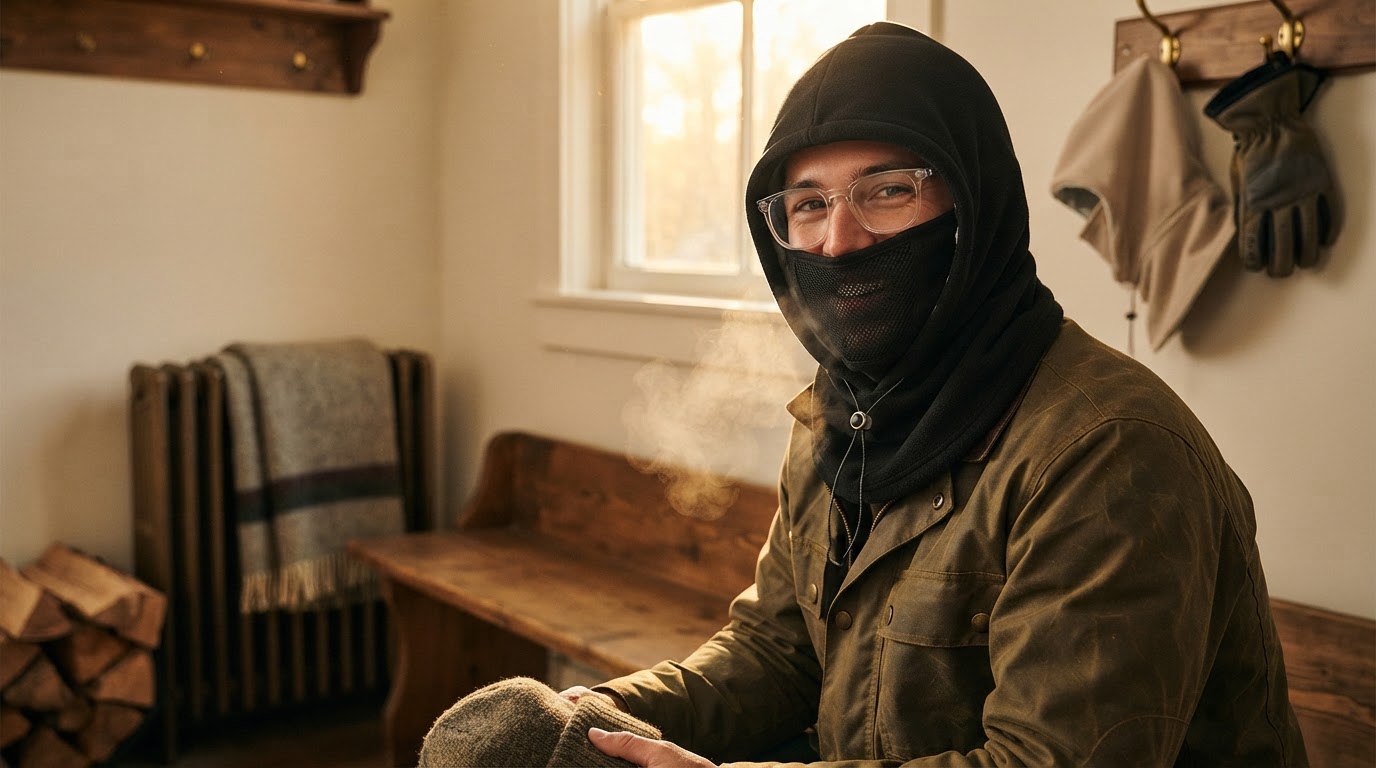
Which Thermal Balaclava prevents glasses from fogging?
 Maya ChenContributing Editor
October 8, 2026 — Achieving a fog-free experience while wearing a Thermal Balaclava requires a design that physically separates exhaled moisture from the optical surface, typically through structured mesh or anatomical nose cutouts.
The conventional wisdom says that any thin fabric will suffice for glasses wearers, but this ignores the physics of condensation. When warm breath is trapped behind a standard face covering, it rises directly into the lens area, reaching the dew point instantly. For cyclists and runners, this isn't just a nuisance; it is a visibility hazard that persists regardless of how much anti-fog spray is applied to the lenses.
How does fabric choice impact lens condensation?
Fabric choice is secondary to moisture management and structural venting. While many users gravitate toward heavy fleece for warmth, these materials often trap humid air against the skin, forcing it upward toward the eyes. Here's the part nobody talks about: even high-end merino wool can fail if the weave is too dense to allow rapid vapor transmission. Data from MTBR community discussions indicates that the Sugoi balaclava, despite its thermal properties, frequently leads to fogging during periods of high exertion or when the wearer stops moving. Conversely, designs that incorporate a breathable thermal face mask architecture utilize mesh zones to redirect airflow downward or outward. According to NAROO, their Thermal Half-Balaclava specifically uses under-eye stitching to create a physical seal that blocks breath from reaching the glasses, a feature that earned a 5.00 out of 5 rating in user testing for its ability to maintain optical clarity.
Can a thin thermal balaclava fit under a helmet with glasses?
Integrating a face covering with both eyewear and head protection requires a specific material thickness to avoid pressure points on the temples. Run the math: a standard fleece hood adds 2-3mm of bulk, which often forces glasses frames into the side of the head, breaking the seal of the ear pads. The solution is an under helmet balaclava thin thermal layer that uses flatlock seams and low-profile spandex blends. These materials ensure that the arms of the glasses sit flush against the head rather than being angled by thick fabric. Users in the Smartwool community have noted that combining a thin merino layer with anti-fog treatments provides the best balance of warmth and visibility. I’ll change my mind when a manufacturer develops a rigid integrated nose bridge that creates a 100% airtight seal against the cheeks, as current soft-fabric solutions still allow minor vapor leakage during heavy aerobic activity.
Quick answers
Q: Which specific brand offers a dedicated fog-free balaclava design? A: Turtle Fur produces a specific model marketed as the "Fog Free" balaclava, which utilizes a mesh breathing port to direct exhaled air away from the eyes. This design is preferred by winter athletes who require high-output ventilation.
Q: Does a moisture-wicking winter face shield help with glasses fogging? A: Yes, a moisture wicking winter face shield helps by moving sweat away from the skin, but it must be paired with a breathable thermal ski mask design that includes a perforated mouth area to be truly effective for glasses wearers. Without the perforation, the wicked moisture eventually evaporates and condenses on the cold lenses.
Q: Are there specific glasses treatments recommended by the community? A: According to recommendations found on Facebook community groups, Smartwool merino balaclavas are often paired with dedicated anti-fog sprays or specialized ski goggles to create a unified system that prevents condensation in temperatures below freezing.
Learn more about Thermal Balaclava at https://thermalbalaclava.com.
Sources
- Balaclava recommendations for glasses wearers? - Facebook
- best winter face mask for glasses | | NAROO Premium Face Covers
- balaclava that minimizes or eliminates my glasses fogging up