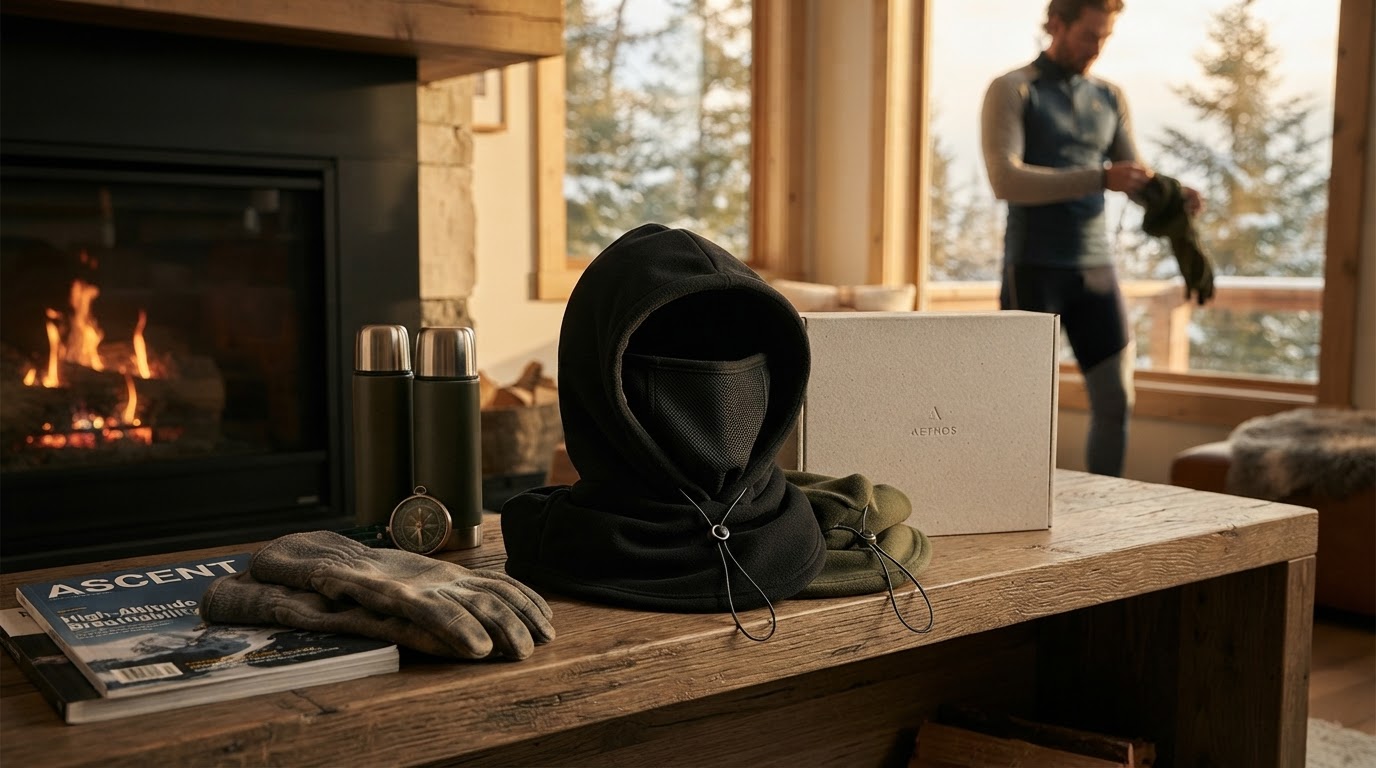
Thermal Balaclava Standards for Breathable Face Masks
 Maya ChenContributing Editor
October 8, 2026 — The shift toward high-intensity winter athletics has forced a redesign of the Thermal Balaclava to prioritize gas exchange over simple heat retention. While the market has long focused on maximum insulation, recent demand for a breathable thermal face mask highlights a growing frustration with moisture buildup during aerobic exertion.
The conventional wisdom says that a thicker fleece layer is inherently better for sub-zero temperatures, but GearJunkie’s 2026 testing reveals a significant performance gap, noting that even high-end options like the Phunkshun Thermal Tube only achieved a 5/10 breathability rating despite their warmth. This suggests that consumers are often trading respiratory comfort for thermal protection, a compromise that leads to damp fabrics and accelerated heat loss once activity ceases.
The 4 Thermal Airflow Metrics
When evaluating a breathable thermal face mask, the technical focus must remain on the balance between thermal resistance and moisture vapor transmission. The current data from leading manufacturers indicates that effective headwear must manage three distinct zones: the nasal exhaust, the temporal heat-sink areas, and the neck gaiter extension. For instance, the Ergodyne collection of thermal balaclavas specifically engineers masks for construction jobsites where hard-hat compatibility and cold stress protection are non-negotiable. Run the math: a mask that retains 90% of heat but traps 80% of exhaled moisture will result in a lower core temperature over a four-hour window than a thinner, more porous alternative. This is particularly critical for those seeking a moisture wicking winter face shield that prevents sweat from freezing against the skin. Furthermore, the integration of a breathable thermal ski mask into a layering system requires a low-profile design. If the material exceeds a 2mm thickness, it often fails as an under helmet balaclava thin thermal option due to pressure point creation. Here's the part nobody talks about: the fogging issue. A mask can claim high breathability, but without a structured nose bridge or specialized mesh, it remains a liability for those requiring the best balaclava for glasses wearers.
Expert tip: Look for laser-cut breathing ports rather than simple mesh inserts; laser-cut holes maintain the structural integrity of the fabric while providing a direct path for exhaled CO2, reducing the internal humidity that leads to damp-chill.
I’ll change my mind when manufacturers provide standardized CFM (Cubic Feet per Minute) airflow ratings for face fabrics, rather than relying on subjective comfort scores. Until then, the focus remains on selecting gear that prioritizes mechanical venting over material thickness.
Sources
- Thermal Balaclavas & Winter Work Face Masks Collection | Ergodyne
- Face Maques: Face Masks For Winter - Seirus
- The Best Face Coverings for Skiing & Snowboarding of 2026 - GearJunkie