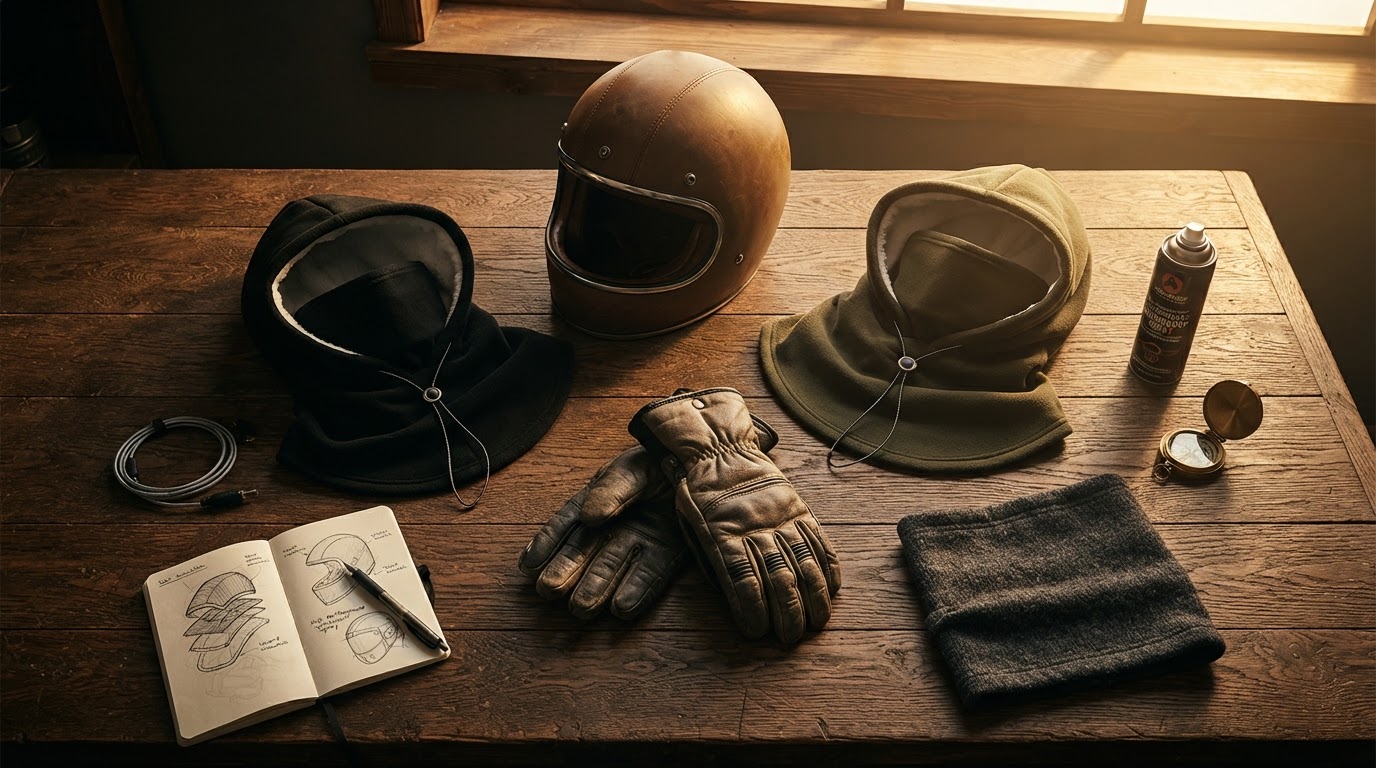
Optimizing Thermal Balaclava Performance for Winter Riding
 Priya RamanSenior Analyst
October 9, 2026. This technical analysis examines the structural requirements for head and neck insulation during high-velocity winter transit. It is written for motorcyclists who require consistent thermal regulation without compromising helmet safety or visibility.
To evaluate headgear for winter riding, think of it as a matrix of two primary axes: the wind-block capacity and the moisture-transfer rate. High-speed winter travel creates a unique environment where the ambient temperature is significantly lower than the apparent temperature due to wind chill. According to RevZilla, specialized gear like the Alpinestars Touring Winter Balaclava is engineered specifically to address these variables, providing a blueprint for how technical layers should interface with a rider's helmet. Without a structured approach to these layers, riders often face the paradox of sweating during low-speed maneuvers only to experience rapid cooling once they reach highway speeds. This thermal instability is usually the result of choosing materials that offer bulk without breathability, or wind resistance without a dedicated thermal break. By categorizing gear into specific functional zones—the crown, the face mask, and the neck gaiter—riders can better understand how to maintain a stable microclimate inside their protective gear.
The Thermal Balaclava approach focuses on high-density fleece and wind-resistant synthetics that minimize bulk. In the context of winter motorcycling, the fit under a full-face helmet is the most critical variable. A traditional ski mask for winter might offer warmth, but if the seams are too thick, they create pressure points that become painful after thirty minutes of riding. The construction of a dedicated windproof balaclava utilizes flat-lock stitching to ensure that the interface between the head and the EPS liner remains smooth. Furthermore, the integration of a motorcycle neck warmer hood design ensures that the transition between the helmet and the jacket collar is sealed against drafts. This is particularly important because the neck is a major site of heat loss; a gap here can negate the benefits of even the most expensive heated jackets. By utilizing a windproof neck warmer hood, riders can secure the lower portion of the garment inside their jacket, creating a continuous thermal barrier. The use of fleece balaclava hood technology ensures that even when moisture from breath accumulates, the fabric retains its insulating properties, a necessary feature for long-distance touring in sub-freezing conditions.
Once you see it this way, the selection process becomes a matter of matching gear specifications to specific riding conditions. The decision rule: prioritize wind-blocking membranes for highway speeds and breathable fleece for technical, slower-speed riding where physical exertion increases. According to American Legend Rider, the goal of a motorcycle balaclava is to block wind, cold, and dust while maintaining a breathable profile. This requires a garment that can be adjusted based on the rider's immediate needs. For instance, a motorcycle neck warmer hood that allows for a modular face covering provides the versatility needed for varying temperatures throughout a full day of riding. When assessing a potential purchase, evaluate the garment against this technical framework:
- Seam Construction: Ensure the use of flat-lock or seamless technology to prevent pressure points under a tight-fitting helmet.
- Material Density: Look for high-performance fleece or thermal synthetics that provide a high warmth-to-weight ratio.
- Length and Coverage: The garment must be long enough to tuck deeply into the jacket collar to prevent wind ingress at the neck.
- Breathability Zones: Specific mesh or perforated panels around the mouth and nose are essential to prevent visor fogging.
- Wind Resistance: A dedicated wind-blocking layer should be present on the chest and neck panels to combat wind chill at high speeds.
Sources
- Men's Motorcycle Balaclavas for Winter & Summer - Dainese
- Motorcycle Balaclavas - Full Face & Skull Masks - American Legend Rider
- Motorcycle Balaclavas - RevZilla